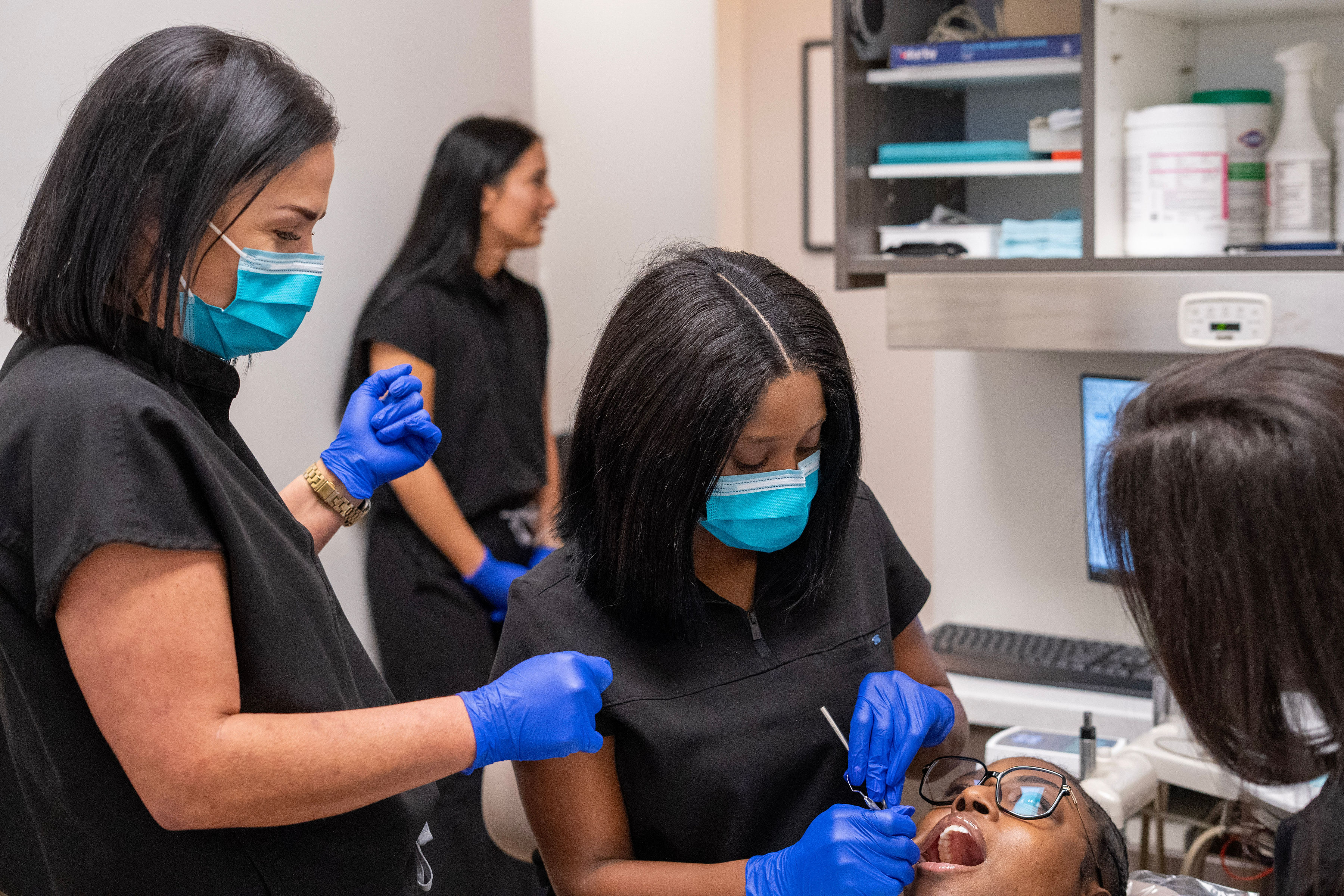
Picture your Tuesday: up at 7:00, a quick coffee run, and a team huddle that starts right on time. Then your first patient walks in, and the day is yours to shape.
You’re up at 7:00, mostly because you want to be on time. There’s a coffee run at 7:30, because nobody starts a patient day on an empty stomach. By 7:45 you’re pulling into the office just in time for the morning team huddle, where the schedule, any changes, and the day’s priorities get confirmed.
8:30 a.m.: First patient of the day
Your first patient is in for a routine cleaning. You greet them, walk them back, and help them get comfortable. Then you take X-rays and intraoral photos so the dentist can review them. A calm, friendly first five minutes often makes the rest of the appointment go more smoothly.
9:15 a.m.: Chairside with the dentist
The dentist comes in for an exam and then a filling. You hand instruments at the right moment, use suction, mix and prep materials, and keep the area clean as the procedure moves along. You’re anticipating what’s needed next so the dentist can focus on the work.
10:30 a.m.: Patient education
After the procedure, you walk the patient through post-op care: what to eat, what to avoid, and when to call the office. Many patients are nervous, and instructions are easier to remember when someone explains them clearly and kindly.
12:00 p.m.: Sterilize, restock, lunch
You sterilize instruments, restock the room, and update patient records. Then you take a short break. Some days lunch is a bite between patients, and some days it’s a real sit-down.
1:00 p.m.: Afternoon schedule
The afternoon brings new patients, a few appointment changes, and someone who needs help understanding their treatment plan. You’re also watching the clock, because keeping the day on track is part of the job.
4:30 p.m.: Clock out
You reset and sterilize your rooms and make sure everything is ready for the next morning. Then you’re done for the day. You might head out for dinner with a friend, or you might take your dog for a walk at the park while the sun’s still out. You leave tired, but you know your work made someone’s day a little easier.
What this job asks of you
This day takes clinical skill, people skills, and organization. You don’t need a four-year degree to start. Most dental assisting programs focus on the hands-on skills you just read about, and a good school will guide you through state requirements, such as the Radiation Health & Safety exam or DANB certification where they apply.
How you could train for this
At Accelerated Academy, training is hybrid. You complete online lessons at your own pace from home, plus 4 hours of in-office clinical training each week in an active dental office. Most students finish in 10 weeks, and you start building real office experience before you graduate.
After your third class, you get access to our Career Services course, which covers resumes, interviews, and job searches. Your career coach supports you throughout.
Frequently asked questions
What does a dental assistant do all day?
Dental assistants prepare treatment rooms, seat patients, take X-rays, assist the dentist during procedures, sterilize instruments, schedule appointments, and explain post-op care.
Do dental assistants need a degree?
Not usually. Many dental assistants train through short, focused programs that combine online learning with hands-on clinical experience.
How long does it take to become a dental assistant?
It depends on the program. Accelerated Academy’s hybrid program takes 10 weeks.
Is dental assisting a good career?
It can be. It offers steady schedules, room to grow, and direct impact on patients. For national pay and job outlook, see the Bureau of Labor Statistics Occupational Outlook Handbook.
Ready to see if this day fits you?
Find your location and start your path to becoming a dental assistant.
